The world of hunting has grown in recent years. We now have many people getting into hunting, probably more than in years past. For that reason, the sport is on the increase.
In part due to that increase, state DNR regulations have changed over the past several years. Rifles are now allowed in many places where they were not before. My Hoosier State is an example of that. Many hunters are buying rifles to head to the deer woods with, and both of these calibers shine in that usage.
If you’re a hunter, you most likely have an opinion about the .270 Winchester and the .308. But, what if you are new to the game and are wondering about these two great cartridges?
Let’s take a quick look at the two. We’ll compare ballistics, similarities and differences, and which might work best for you.
Ballistics
Without belaboring the point, let’s look at a ballistics chart for the two cartridges…

We can see that the numbers are very close. Velocities and energies are similar up close, but as you move the target further out, the .270 starts to gain a slight edge. The slightly thinner bullet just slips through the air a bit faster and retains more oomph. Sectional density is more favorable in the .270, as well. Note that there is not a lot of difference… it is truly up to you which caliber you hunt with. They both are proven game getters.
Sames & Differents
By that, I mean what do the two have in common, and how are they different? That’s pretty much this article in a nutshell.
Similarities between the two might include the following. They both:
Are a higher-pressure rifle round;
Are good at longer-distance shooting;
Felt recoil is similar
Differences include:
Given the same weight bullet, the .270’s are slightly thinner, which aids downrange trajectories and energies;
The .270 would be better for varmints, as lighter bullets can be used;
The .308 has about a 2:1 ratio in terms of the availability of factory loads, which means more variety and cheaper ammo;
The .308 will fit in a shorter action than the .270
The .270

The .270 first saw the light of day in 1925. When the .30-06 came about, it not only was the darling of the hunting set, but was also used by wildcatters to come up with new cartridges. Most of them necked it up – .35 Whelen, .400s, etc. – but Winchester went the other way and took it down a notch or two, to .277 caliber. You have to know that the .284 - 7mm - was really popular at the time, in various guises. The .277 was a bit of an odd duck that took a while to catch on. But, catch on it did, in the Model 54 Winchester rifle. It slowly gained traction until it secured a spot at the top of the hunting heap. Jack O’Connor, while writing for Outdoor Life after WWII, touted the cartridge and took truckloads a large critters with it. He used mostly 130-grain bullets, and also praised the 110s for smaller game, claiming that the 110-grainer’s trajectory was almost the equal of the .220 Swift’s.
Funny… what goes around comes around. The Army, as we type, is in the process of rolling out a new cartridge for their warriors… 6.8x51. It uses a .277 bullet. Hmm….
The .308

Based on the .300 Savage case, the .308 came about in 1952 (That was a good year. That’s when I came about). Here is one instance when the military adopted a service round after its civilian counterpart was established, not before, as usually happens. They were looking for a replacement for the venerable .30-06, and drafted the .308, calling it the 7.62x51. One advantage of the newer cartridge is that the .308/7.62 fits into a shorter action than the .30-06, which means rifles can be smaller and lighter.
There are two small differences between .308 and 7.62x51. The .308 is loaded to higher pressures than the 7.62, and the .308’s case walls are a bit thinner to compensate for the pressure. So, you are not supposed to fire .308 in 7.62x51-chambered rifles, although the opposite is OK. (I know, it happens every day, but I needed to say it.)
So, What Should You Use?
Here is where I vascillate. I am not in the habit of reading shooters’ minds in order to know what rifle cartridge would work the best for them. What I will do is list a couple of generalities, and then you can make the call.
If you are looking to expand your rifle collection to include a boomer along the lines of either of these cartridges, decide what you will use it for. Will you be hunting mostly deer-sized or larger game? Or, will you add some varmint hunting into the mix? How about range? Does your hunting territory go way out there, or is it mostly a closer woods-type environment? Will you be buying your ammo at a local big-box store or online?
If you answered these questions with a “deer-or-larger”, “fairly up-close”, and “yup on the local store”, then you might want to consider the .308. It is great at distances out to 400-500 yards on larger game, and it has a wide variety of less expensive ammo available for it in big-box stores.
But, if you live out west and typically hunt across that “fur canyon”, the .270’s slightly flatter trajectory might pay off. You won’t need 50 different loads to choose from if most of your hunting is of that one type. Also, with a 100- or 110-grain bullet load, you’d be set up for coyotes or other varmints. So, with two loads, you’d be good to go.
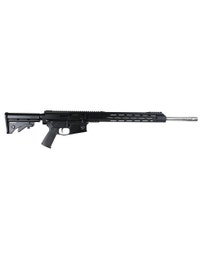
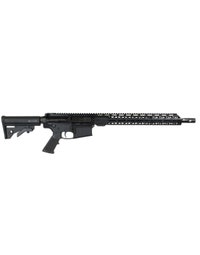
Both of these cartridges have proven themselves. This was not meant to be a “this-one-is-best” type of article, but was simply intended to maybe give you some information and direction on both of these great rounds. Check out what we have here at Bear Creek Arsenal for the .270 and the .308.
Let’s hear from you below about your experiences with them