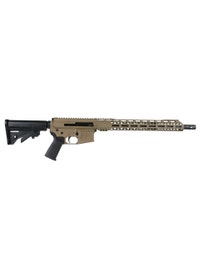
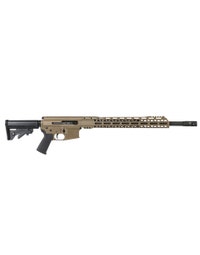
If you put an AR-10 next to an AR-15 at the range, and you ask someone which is more accurate.
You will likely hear, "The AR-10 shoots larger cartridges, so it has to be more accurate." This seems almost like a trick question.
While the AR15 is generally lighter, produces less recoil, and uses smaller cartridges. The AR 10 is larger and heavier. So it uses more powerful cartridges. These are often better for long-range shooting.
Neither platform has an inherent monopoly on accuracy. Instead the firearm, caliber, ammunition, shooter, and more all greatly impact how accurate, or inaccurate, a particular platform is.
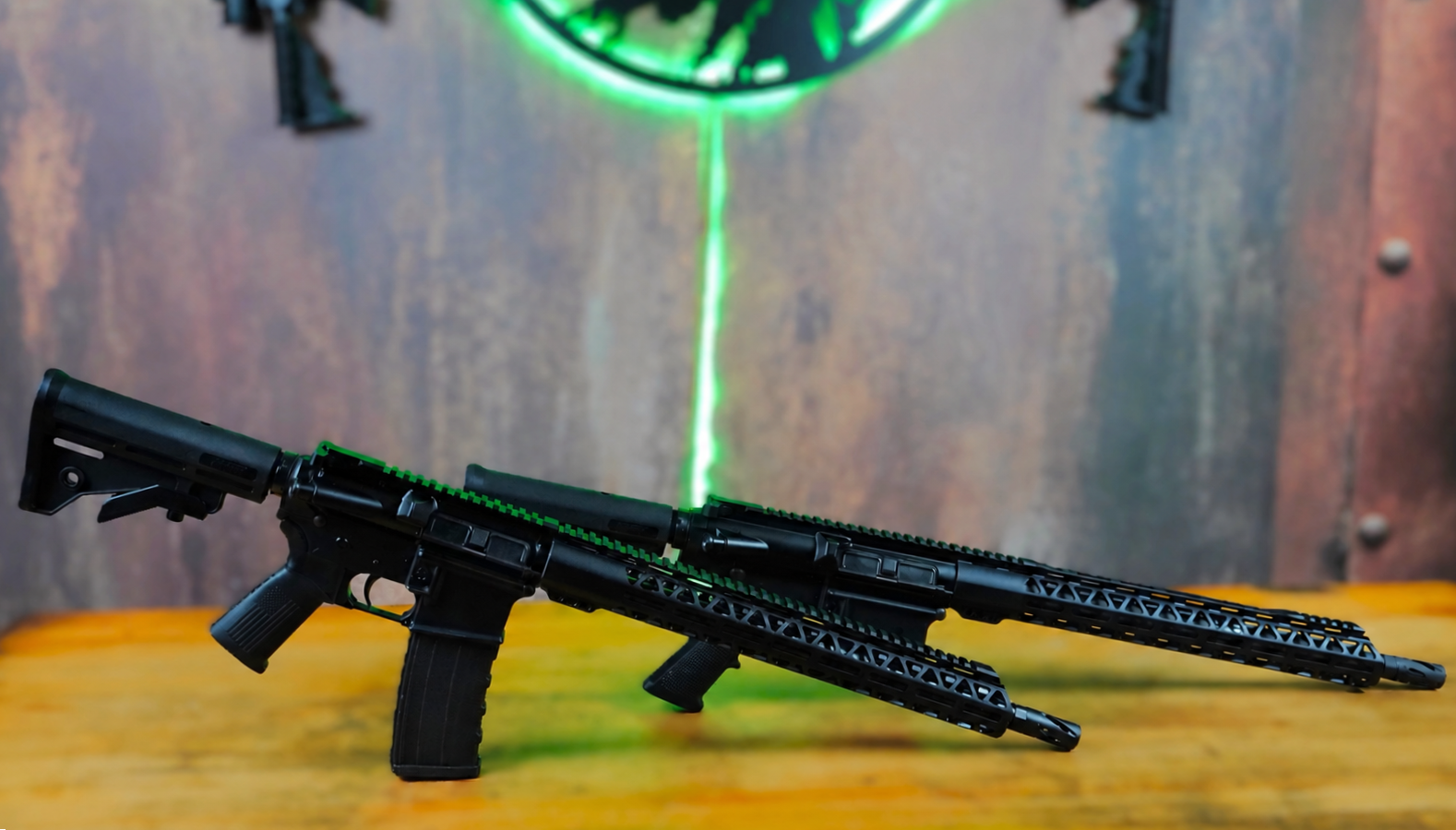
What Actually Determines AR Accuracy?
If the receiver size isn't what determines accuracy, what does? If we take the shooter, environmental conditions, and the gun's intended use out of the equation. The quality of the individual parts used to make the rifle, ammunition selection and consistency, and how the parts pair with each other are among the few factors that affect accuracy.
Think of a rifle and ammunition combination as a complete system. Any time you change one part of that system, no matter how big or small it seems, it can affect the results you see on target. But what exactly about each piece can either improve how well it shoots or fast-track it to the used gun rack at the nearest gun shop? Below, we'll highlight the top factors that impact accuracy on the major parts of any AR-10 or AR-15 build.
Rifle Components and How They Impact Accuracy
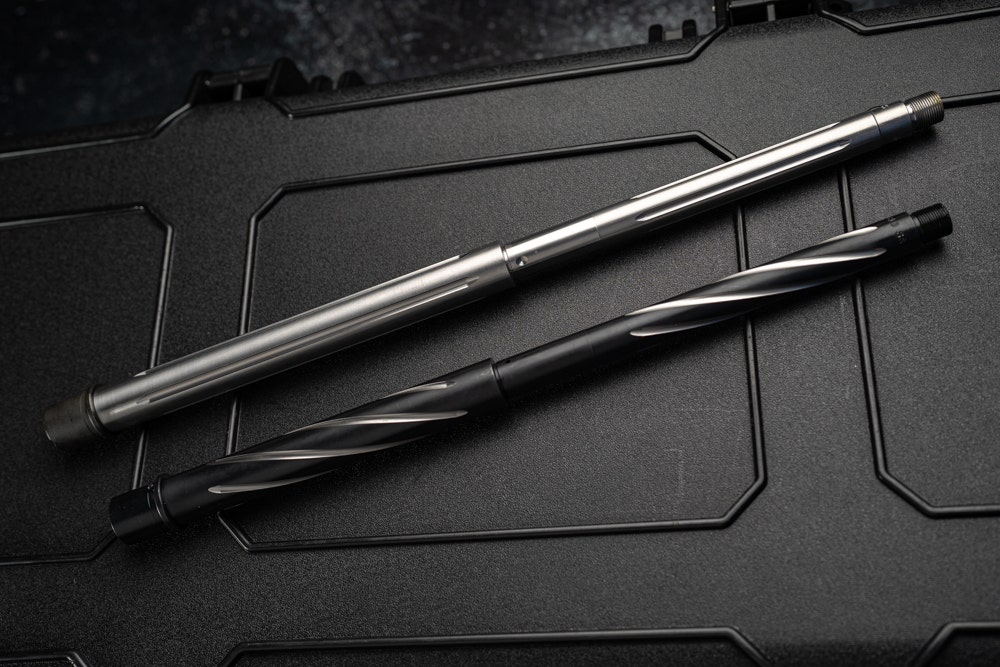
Barrel: Profile, Length, and Twist Rate
A barrel's profile can greatly affect a rifle's accuracy.
Heavier barrels are stiffer and absorb heat better. This helps keep the point of impact consistent during longer strings of fire.
Lightweight barrels make a rifle lighter, but they heat up faster, which can cause point-of-impact shifts if you don't give them time to cool.
Government-style barrels, along with fluted barrels and similar profiles, balance weight, handling, and heat control.
No one style is more accurate than the next, but a profile is typically better suited to the task at hand. Common profiles seen in today’s market include:
- Pencil/Lightweight Barrel
- Government/M4 Barrel
- SOCOM Barrel
- Heavy Barrel
- Bull Barrel
- Fluted Barrel
Barrel length and twist rate are two factors that will influence your rifle's accuracy. A longer barrel typically means increased velocity once the bullet exits. Resulting in a more optimal trajectory and better performance at distance. However, it does not automatically make the rifle more precise.
Twist rate is all about keeping the bullet stable once it leaves the barrel. If the twist is too slow for the bullet you're shooting, especially longer or heavier bullets, your groups can start to open up. Pairing the right twist rate with the ammo you plan to use can make a real difference in how consistently your rifle performs.
Handguards: Free-Float vs. Drop-In
A free-float handguard is one that doesn’t make contact with your rifle barrel. This allows you to use a bipod, sling, or even steady the gun with your support hand without imparting any pressure that may otherwise shift your point of impact.
Now, although it won’t instantly transform an average rifle into a precision tack-driver, it will eliminate one variable that can influence overall accuracy.
On the other hand, a drop-in style handguard makes contact with the barrel once installed, opening the gates for you to unknowingly affect precision and consistency.
Trigger
A trigger affects accuracy because it influences how easily the shooter can fire without disturbing the rifle. A lighter, smoother, more predictable trigger makes it easier to press straight to the rear while keeping the sights on target. While a heavy, gritty, or inconsistent trigger can cause the shooter to pull the rifle off target as the shot breaks. The trigger does not make the rifle mechanically more accurate.
Still, a good one can make it much easier for the shooter to take advantage of the rifle's existing capabilities. Common triggers and blade styles you’ll see on the market include:
- Single-stage
- Two-stage
- Mil-Spec
- Drop-In (Cassette)
- Curved blade
- Flat blade
External Factors That Impact Accuracy
Optics and Mounts
The most accurate rifle and ammo combo won't perform well if the optic isn't mounted correctly. Secure the mount to the gun's upper receiver, with the rings and base tightened to the manufacturer's specs so nothing shifts under recoil.
A loose mount, a slight cant in the scope, or settling for a "close enough" zero will all negatively impact accuracy results.
When the optic is mounted properly and the zero is truly confirmed, you're able to take full advantage of the rifle's real accuracy potential.
Ammunition
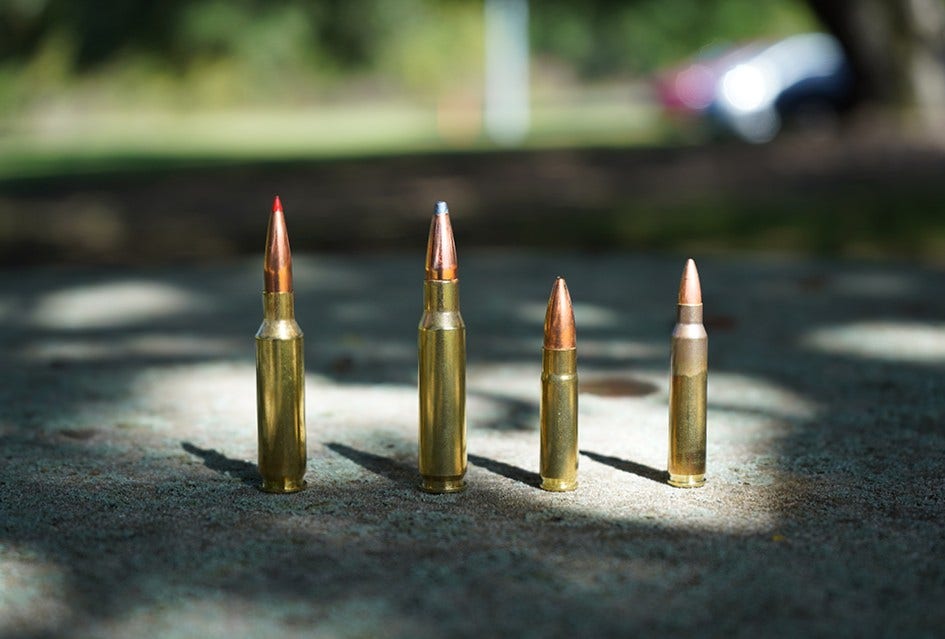
Your rifle can only shoot as well as the ammunition you feed it. Even within the same caliber, different loads can produce very different results. This is because of changes in bullet weight, bullet design, velocity, propellant, and manufacturing consistency.
Some rifles simply shoot certain loads better than others, so testing a few options is often the best way to see what your barrel prefers. Once you find a load that works well with your barrel and intended end use, you’ll start to see more consistent groups.
Environmental & Atmospheric Factors
Things like wind, temperature, humidity, and altitude can move your shots more than you might expect. And how much they matter depends a lot on the cartridge you’re shooting.
Wind is typically the biggest factor, because even a mild crosswind can start pushing a bullet off course as distance increases.
Up close, those differences may barely show. But farther out, they can change your point of impact. They may also require a small adjustment from your usual dope.
Caliber May Matter More Than Platform
Caliber can have just as much to do with accuracy as the rifle platform itself. With an AR 15, cartridges like .223 Remington and 5.56 NATO are popular because they're easy to shoot, widely available, and capable of very good accuracy.
A .223 Wylde chamber gives you the ability to shoot both. Cartridges like 6mm ARC stretch the AR-15's capabilities even farther at longer ranges.
The AR10 steps things up with cartridges like .308 Winchester and 6.5 Creedmoor, which have more energy and better long-range performance. The tradeoff is that they generally come with more recoil. That doesn't mean the AR 10 is less accurate; it just means caliber choice and rifle setup matter more than the name on the platform.
Closing Thoughts
When it's all said and done, you can't really crown a winner in the AR 10 vs AR 15 accuracy debate. Both platforms can shoot extremely well when the rifle, caliber, ammo, optic, and shooter are all in tune. Instead, it makes more sense to figure out what you want the rifle to do and build it for that job.
Whether you're running an AR15 at mid‑range or pushing an AR10 out farther, the setup you choose, and how much you practice, will matter a lot more than whatever name is stamped on the receiver.
Whatever platform fits your needs, Bear Creek Arsenal offers a wide selection of AR-15 and AR-10 calibers to choose from. Want to learn more about the differences between AR-15 and AR-10 calibers? Check out our other blogs on the topic here. Don't forget to comment below and let us know which platform is your go-to choice!